Senior Photograph Conservator Barbara Lemmen on 25 Years at CCAHA and Her Next Chapter
As Senior Photograph Conservator Barbara Lemmen concludes her 25-year tenure at CCAHA, we are celebrating an extraordinary legacy at the Center and her many contributions to the field of photograph conservation through treatment, teaching, and scholarship. For a quarter century, Barb has combined the careful work of conserving irreplaceable photographs with an enduring commitment to education. A natural mentor to students, colleagues, and anyone seeking her expertise, she has generously shared her knowledge while helping train and support the next generation of cultural heritage professionals. In this Q&A, Barb reflects on the experiences that defined her time at CCAHA, the people and projects that influenced her along the way, and what she's looking forward to next.
You just celebrated 25 years at CCAHA this past March—a remarkable milestone. Looking back, what stands out most when you think about how your work has evolved since you first arrived?
CCAHA has been the backbone of my career in conservation. Its people, culture, and knowledge have trained me, guided and supported me in growing professionally and serving our clients. As I became more senior, I took on more complicated and larger projects but also transitioned from being a mentee to a mentor. This transition, which involved not only my role as an educator but also the adoption of a more proactive and collaborative approach to work at the Center, is what I would like to be remembered for.
Looking back, are there any projects from your time at CCAHA that feel especially meaningful now, whether because of the objects themselves or what they represent? 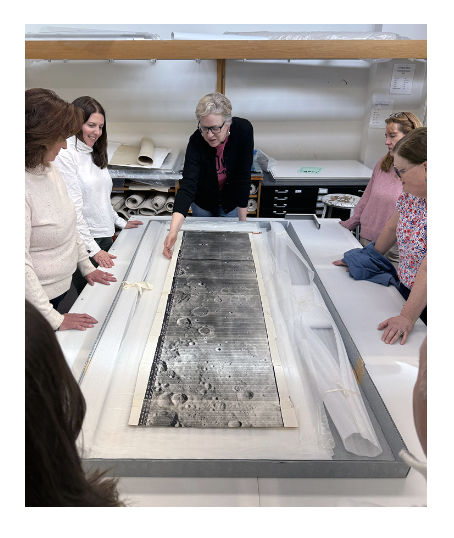
Early in my career, I learned that NASA stores vintage photographs from its missions at 0⁰F to keep them from decaying. Recently this came back to me upon seeing how really excited and engaged visitors and staff have been with the large photographic maps taken by Lunar Orbiters, and color photographs by and of astronauts which are currently at CCAHA. These are the cultural and technological heritage of the world, and everyone has an emotional connection to them. Who would not be moved by an earthrise? While the treatments are not particularly complex, they need to take into account the age of the materials and their unique purpose.
How has your approach to photograph conservation shifted as materials and imaging technologies have continued to change and expand?
Preventive conservation has blossomed and matured since the time I did my preprogram internships in the 1980’s, and digital imaging became common during my career. Not only did these provide additional approaches to safeguard and access photographs, such as offering clients digital reproductions of light sensitive photographs, but made my work more interdisciplinary through collaboration with these new professions.
This past year saw the publication of Conservation of Photographs: Significance, Use and Care, to which you contributed as an author. How do you hope the research, knowledge, and experience captured in the book will shape the field moving forward? 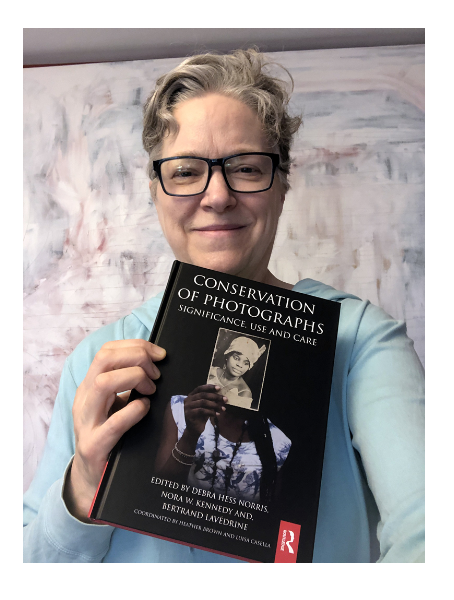
Conservation of Photographs is a comprehensive reference book which captures historical aspects of photo conservation and the current state of the field. “Shape the field” is too bold a statement, but by having this information all in one place and being available in digital form, it can become widely disseminated and accessed.
You’ve spent much of your career balancing treatment work with teaching and mentoring. How has your perspective on that relationship between practice and education changed over the years?
“Balancing” implies effort, whereas for conservators practice and education are naturally intertwined. Mentoring of interns, students, and colleagues is a customary component of many work environments. And the need to meet the challenges of new photographic materials and technology, plus integrating other viewpoints into conservation, demands we move forward in both our skills and thinking.
What has most surprised you about the students and emerging conservators you’ve worked with more recently?
They are focused professionals almost from the start of their journeys, knowing what the joys and challenges will likely be as they progress. I’m also so pleased that students and emerging conservators have made it common practice to work with the other caretakers of heritage materials and strive for a more inclusive and empathetic approach to preservation.
You earned your master's degree through the Winterthur/University of Delaware Program in Art Conservation (WUDPAC) and have taught in the program since 2002. How has your experience with WUDPAC students and colleagues influenced your own practice as a conservator?
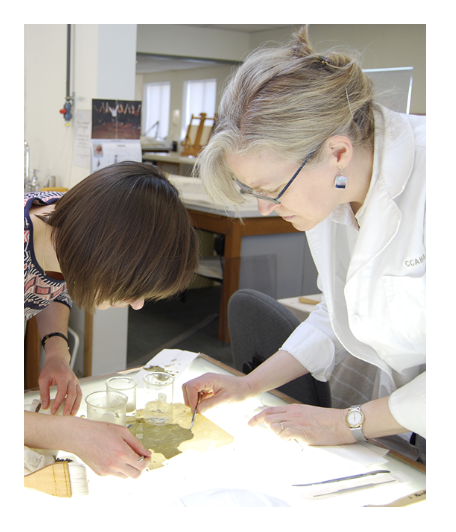
This has been an invaluable opportunity on many levels. More is always better in regard to colleagues, information, experience, and perspectives when one is tasked with preserving complex objects. For example, my graduate students this past year created some of the best matched fills for losses in the photographs they were treating that I have ever seen. I now have the opportunity to share their techniques and try them myself.
What has sustained your enthusiasm for the work over such a long career, especially through complex or demanding treatments?
Curiosity is a driving force for conservators and there is so much that is interesting. Changes in photographic technology and the creativity of new artists feed it. Photograph conservation and education is expanding world-wide, so I find that there is always more to learn, whether that is a better way to care for an objects, or the perspectives of new colleagues.
What will you miss most about your day-to-day work at CCAHA?
CCAHA has an unusually accepting, kind, welcoming, and gastronomically talented staff and work culture. It supported me in growing as a professional while raising children. I should also say that spending time with at memorable objects does not get old; I have been known to walk a photograph around the lab like a proud parent, to share my delight at its singular beauty.
As you look ahead to life after CCAHA, what are you looking forward to most?
My primary goals are probably not much different from everyone’s—seeing more of my friends and family and taking care of accumulated chores around the house (which happen to include organizing photographic book and tools). I also want to continue to contribute to photograph conservation, particularly through improving educational opportunities for colleagues. I’m going to do some deep listening first to find the overlap between what I can offer and what is truly needed.
Barb’s impact on CCAHA and the wider conservation community is immeasurable. To honor her legacy of mentorship and excellence, please consider making a gift to the Glen Ruzicka Legacy Fund. Established in honor of Glen Ruzicka, a former Director of Conservation at CCAHA, the fund supports the training and professional development of emerging cultural heritage professionals.
Make a Gift to the Glen Ruzicka Legacy Fund
About Barbara Lemmen
Following her 25-year tenure at CCAHA, Barbara Lemmen serves as an affiliated faculty member in the Winterthur/University of Delaware Program in Art Conservation (WUDPAC), where she lectures on photograph conservation. Learn more on her profile with the American Institute for Conservation (AIC), where she is a fellow.
Learn from Barb
Recorded Webinars:
Photographs in the Archive: Photo Album Preservation
Common Collection Conditions: Assessing the Condition of Your Photograph Collections
Demystifying Cold and Frozen Storage
Email Barbara Lemmen
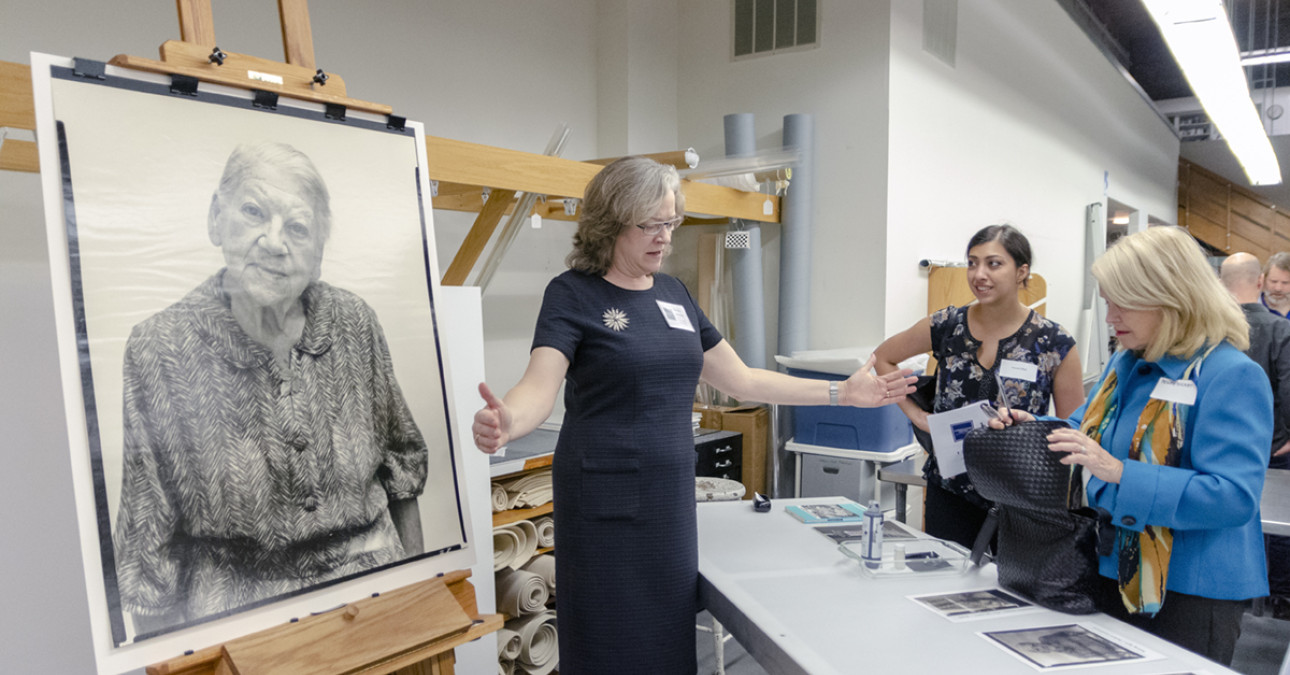
Images, from top: Barbara Lemmen discussing the treatment of Stephen Perloff photographs at CCAHA's Fall 2018 Open House; Barb speaking to a group about NASA lunar orbital photographs, 2026; Barb holding a copy of "Conservation of Photographs: Significance, Use and Care" (2025); Barb in the lab providing hands-on instruction.