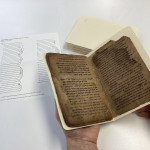
Art Conservation In The Classroom, Science, History, And Creativity

Connect science, history, and art in your classroom while discovering how you and your students can play a role in caring for cultural heritage.

We Come to You, Free of Charge

Are you a middle or high school teacher in the Philadelphia area interested in adding conservation to your curriculum? Art Conservation in the Classroom is an initiative for grades 6-12 that combines hands-on learning, career readiness, and STEAM curriculum goals to augment the amazing work you do in your classroom every day.

Through a combination of class visits with a conservation or preservation professional and pre- and post-visit lesson plan content that you can use on your own, students explore conservation and preservation while developing transferable skills for a range of career paths. The lessons meet state and national curriculum standards in ways that are fun, accessible, and relevant to your students’ lives. They were created with teachers, for teachers, with the help of a curriculum consultant and an advisory council of teachers like you.

We developed these lessons with help from a two-year Holly Maxson Conservation Grant from the Foundation for Advancement in Conservation to increase awareness of careers in the field while empowering young people to care for the meaningful heirlooms that belong to their families and communities. 


What Is Art Conservation and preservation?

What happens when a historic painting changes color? Why do photographs fade? How do conservators decide what an object needs to stay protected—and how do we keep damage from happening in the first place?

Art conservation and preservation combine art, science, and history to understand, protect, and care for cultural heritage materials. Preservation focuses on the everyday choices—proper storage, handling, and environmental conditions—that prevent damage before it starts. Conservation is the hands-on treatment conservators use to repair and stabilize an object once something has gone wrong. Together, they investigate how an object was made and why it changes over time, then apply specialized knowledge and skills to help it survive for future generations.

Our programs give students the chance to explore both sides of the field through hands-on activities, experiments, and real-world examples, while learning about the people and careers behind the work.


Interested in bringing conservation to your classroom?

Greg Stewart

  Contact Education Program Manager Greg Stuart
  to learn more or schedule a visit.
  gstuart@ccaha.org
  215.545.0613 ext. 336


Explore Our Classroom Lessons ▼

Each lesson below can be adapted for grades 6–12 and used to complement classroom learning in a variety of subjects.
Archives

What would you put in the “archive of you?” Of your classroom? Of your community? This lesson plan introduces students to the idea of an archive, including how to assess the condition of items that are significant to them, and how to “tag” items (much like social media hashtags) to group them together and help others find them. This lesson is great for social studies classrooms.  

Explore Lesson Plans


Lead White Conversion

How can you use scientific principles to make historic art and artifacts look like when they were first made? This hands-on lesson focuses on the process of how paint can change color over time due to exposure to pollution and how conservators use chemistry to return it closer to its original color. This lesson is ideal for general science and chemistry classes, as well as art and art history. 

Explore Lesson Plans

Bookmaking Basics

How did people make books historically? This hands-on workshop introduces students to the process of making a book using the basic “pamphlet stitch,” and from there, they create their own blank books which can be used for their own personal sketchbooks, journals, or other use of their choice. Perfect for art or social studies classes. 
 

Explore Lesson Plans

Lightfastness

 Have you ever wondered why an old drawing, poster, or photograph you have hanging up in your home or classroom fades over time? In this lesson, your class conducts an experiment to see what types of pigments and inks fade over time, and which ones have good “lightfastness.” Great for science and art classes.  
 

Explore Lesson Plans

Preservation Priorities

If you had to save one treasured item of yours in an emergency, what would you save? This workshop walks students through an emergency scenario, asking them to problem-solve and make a decision about which artifact they should save, just as a museum might prepare to do. Perfect for social studies.
  

Explore Lesson Plans

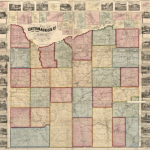
colorful map.

Curriculum Map

Explore a full curriculum map that details learning objects, curriculum standards, and lesson extensions.
Open book.

Resources How-To

Learn more on how to use our resources.
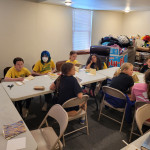
Group of young students sitting around folding tables engaged in a hands-on bookbinding activity with paper, scissors, and tools.

Logic Model

Explore a Logic Model we’ve developed with the Philadelphia School District’s Office of Strategic Partnerships.


Special thanks to our curriculum writer and consultant, Lori Litchman, and the members of our teacher advisory council, Andrea Keefe, April Martinelli, Felicia Rosen, Monica Rowley, and Holly Victor for authoring and advising on these lessons.  


The creation of these lesson plans was supported by the Holly Maxson Conservation Grant from the Foundation for Advancement in Conservation.